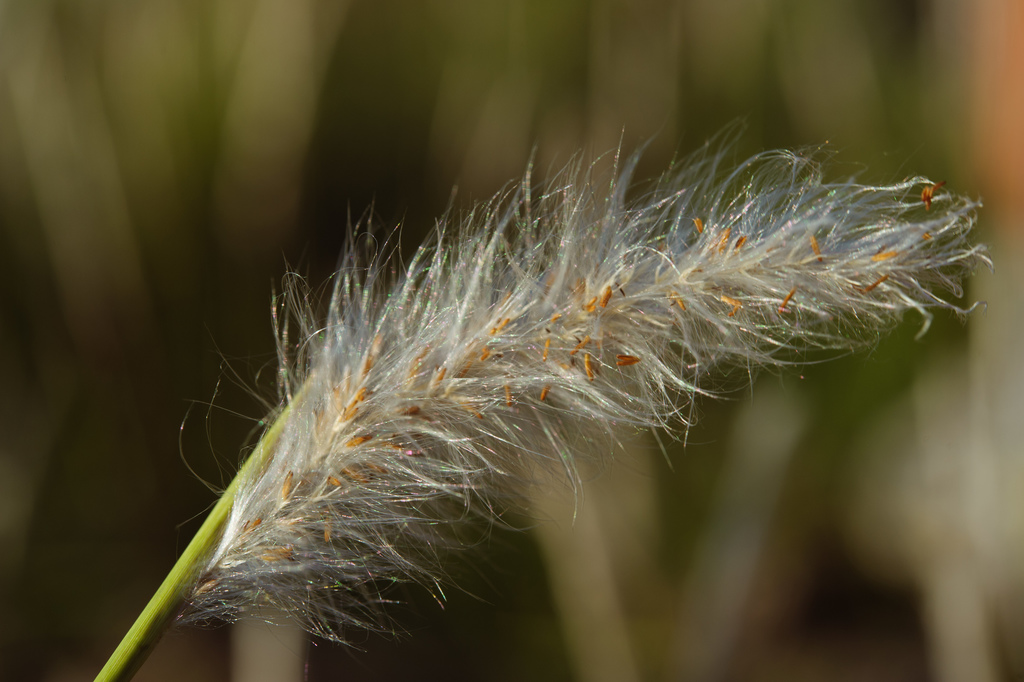
 (c) Cheng-Tao Lin, some rights reserved (CC BY), uploaded by Cheng-Tao Lin
Cogon Grass
Imperata cylindrica
Habitats
Flowering
- cream
- green
- white
- yellow
Imperata cylindrica grass grows about 1 metre in height as clumps in seep areas and is wind pollinated. It spreads quickly in damp soil through a strong root (rhizome) system.
This is the host plant for two endemic butterfly species, Kedestes barberae bunta and Kedestes lenis lenis (see http://speciesstatus.sanbi.org/assessment/last-assessment/1197/). The caterpillars can eat only this plant and sew the blade together and protect them selves from the elements and predators inside the tubular cocoon. The Sword grass is found in open sandy areas and thrives in impoverished soils in Australia. Prefers a pH in the range 4.5 - 6, tolerating 4 - 7.5 and thrives after fire. It has multiple medicinal, edible and craft uses and is good for erosion control and stabilisation.